
Coordinating Bugs Through Moving Machinery
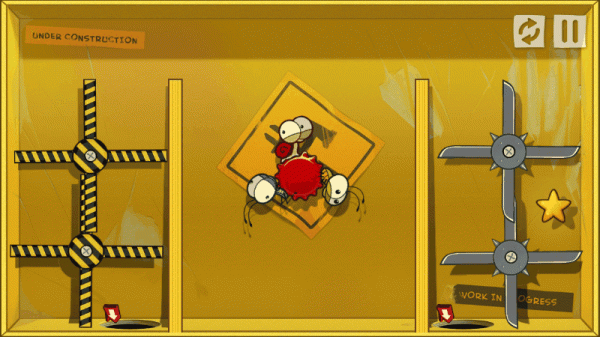
Each level in Gadget Room Insect Navigation gives you a small group of bugs and one glowing exit. The workshop between them is not static: fans spin, drawers slide, and pendulums swing. Because those parts keep moving, you cannot simply send every bug forward at once. You decide which bug moves first, when it moves, and how long to wait before the next one follows. The puzzle is less about reflexes and more about reading a pattern and committing to a sequence.
Hazards That Demand Different Plans
Obstacle types are not interchangeable. Some follow predictable loops, so you can learn their rhythm and slip a bug through at the right moment. Others react to the bugs themselves, which means the order you move them changes the danger. A spinning fan might be safe until a bug crosses its path; a sliding drawer might close a gap you were counting on. Each new hazard forces you to revise your approach rather than reuse the last solution.
Feedback That Keeps Attempts Calm
Bright colors and simple, expressive bug designs make the workshop feel approachable. Sound cues mark successful moves and near misses, so you can tell what went wrong without staring at a failure screen. When a bug does get caught, a short reset animation plays and you try again. There are no time limits and no score penalties, which keeps the focus on experimenting with timing instead of performing under pressure.
A Gentle Difficulty Curve
Early levels use few obstacles and few bugs, giving you room to understand the core loop. Later levels add more bugs and more complex obstacle patterns, so the coordination problem grows. Checkpoints appear generously, reducing the amount of repeated work after a mistake. The result is a curve that stays achievable: each new challenge asks for a slightly better plan, not a faster reaction.







Comments
0 comments