
The Core Drawing Mechanic
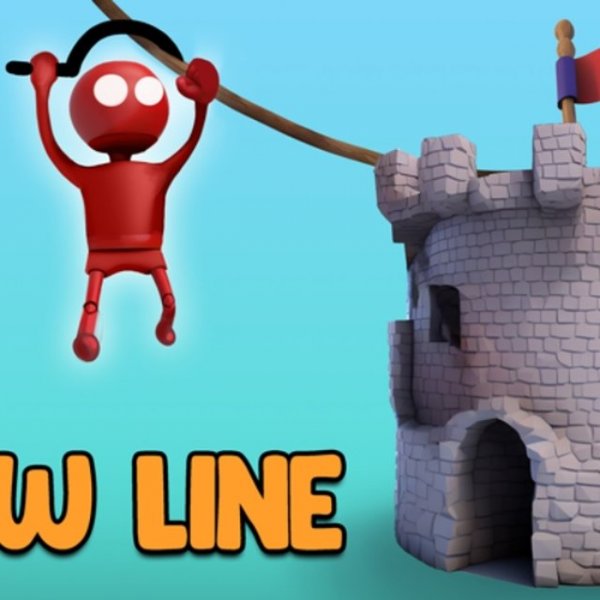
Path Planning Puzzle is built around one action: drawing a continuous route from where the character hangs to a point where it can safely touch the goal. The goal sits in a different area, separated by a barrier, so a straight line rarely works. You use mouse or touch input to sketch the path. The moment the character's body contacts any other object, the attempt ends. That single rule turns every level into a test of observation before action.
Reading the Visual Guide
Two guide lines appear on screen: one at the character's head level and one at the feet level. These show the vertical space the character occupies as it moves. If an obstacle falls between those lines along your proposed route, the path is blocked. The guide is not a hint system; it is a measuring tool. Learning to read it accurately is the main skill the game develops.
Level Structure and Progression
The game opens with a tutorial level that explains the drawing mechanic and the visual guide. After that, levels increase in challenge by placing the goal farther away, adding barriers, or narrowing the safe corridor. Each level is a self-contained problem with a unique layout. There are no timers or score multipliers mentioned, so the pressure comes from precision rather than speed.
Who This Suits
With a family-friendly rating of 3+ and a clean visual design, Path Planning Puzzle fits children and adults who enjoy spatial reasoning tasks. It runs in modern browsers on desktop and mobile, so sessions can be short or extended. Players who prefer fast action may find the pace slow, but those who like planning before acting will recognize the appeal.






Comments
0 comments