
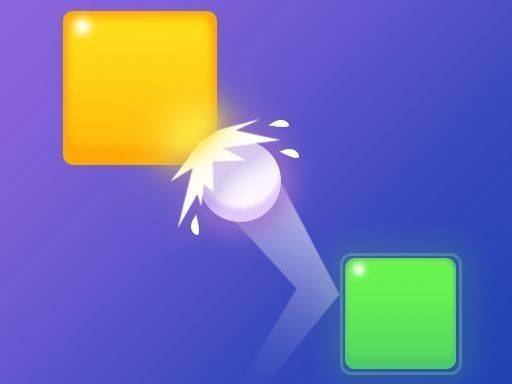
Aiming and Rebound Mechanics
Each level presents a fixed arrangement of blocks, and you have a set number of balls to clear them all. You tap, hold, and drag to launch a ball, with a trajectory line showing the predicted path. The physics engine governs how the ball moves after contact, so rebounds and angles matter as much as the initial aim. A shot that looks direct may carom off one block into another, changing the outcome. This makes every launch a small experiment in cause and effect.
Level Structure and Progression
Block layouts grow more complex as you advance. Early levels use simple clusters that fall to straightforward shots, while later arrangements demand multi-step planning. Because there are no timers or penalties, you can study the layout and test different approaches. Unlimited retries mean a failed attempt costs nothing but the time to reset. The difficulty curve comes from spatial reasoning, not reflex speed.
Who This Puzzle Suits
The game targets players who enjoy logic puzzles and brain teasers rather than action. Its touch controls and clean interface remove barriers for younger players, and the absence of inappropriate content keeps it family-friendly. Adults looking for a short mental workout will find the same appeal. Sessions can last a few minutes or stretch longer if a particular block formation resists a clean solution.
Practical Play Advice
Watch how blocks react when struck at different points. A hit near an edge may send a block spinning into neighbors, while a center hit pushes it straight back. Use the trajectory line as a starting reference, but expect the ball's real path to shift after the first collision. When a layout looks impossible, try aiming at a support block instead of the most obvious target. Patience and observation matter more than speed.




Comments
0 comments