
How the Matching Works
Each round begins with a grid of face-down cards, every one hiding a different aircraft illustration. You flip two cards at a time. If the images match, both cards stay face-up and leave the board. If they do not match, they flip back after a brief pause. The round ends when every pair has been cleared. That turn-based rhythm is the whole game, and it is what makes the rules understandable within seconds.
Why the Aircraft Theme Matters
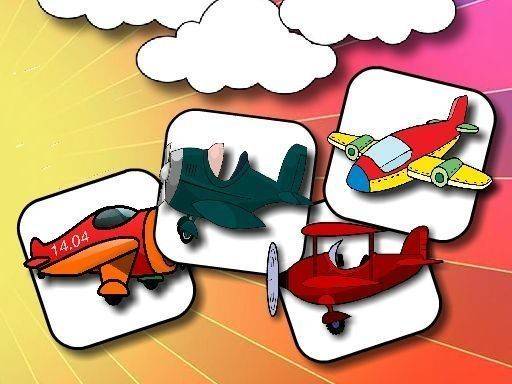
The cards show bright, clear drawings of various aircraft, from small planes to larger models. Each illustration is distinct enough that you can tell them apart at a glance, which keeps mistakes about memory rather than eyesight. Soft colors and a clean layout keep attention on the cards. There are no distracting animations or clutter, so the visual design supports the matching task instead of competing with it.
Pacing and Who It Suits
No countdown timers or speed requirements exist. You can think as long as you need before flipping the next card. That makes the game approachable for younger children, older adults, and anyone who prefers a relaxed pace. Controls are minimal: a click or tap on each card. Some versions let you adjust the grid size, so a smaller board gives quicker rounds while a larger one asks for deeper concentration.
Tracking Your Own Progress
Many implementations include a move counter and a timer, letting you see how many turns you took and how long you played. Because there is no external pressure, each session becomes a personal benchmark rather than a competition. Repeating the same grid size can reveal gradual gains in recall speed and accuracy. That self-paced tracking encourages regular practice without stress.








Comments
0 comments