
Straight-Line Movement Rules
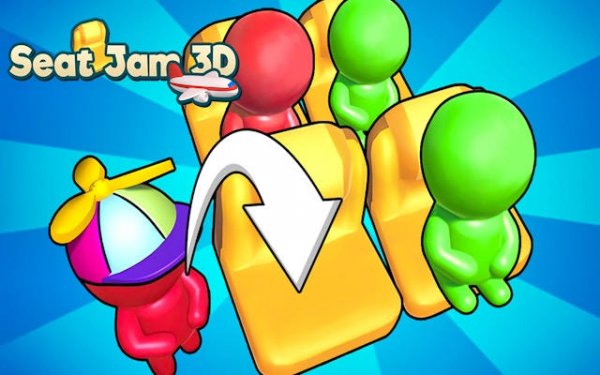
In Seating Logic 3D, every passenger moves only along straight paths—up, down, left, or right. Diagonal shifts are not allowed, which adds a layer of strategy to each decision. Players tap or click a passenger, then select an empty seat to move them. This simple rule set creates puzzles that feel like a cross between a sliding puzzle and a logic grid.
Level Design and Difficulty Curve
The game begins with small, straightforward bus layouts. As players progress, the grids grow larger and the number of passengers increases. Some levels introduce blocked seats or multiple passenger types that must be arranged in a specific order. The difficulty rises gradually, so each new puzzle feels like a natural step forward rather than a sudden jump.
Visual Clarity and 3D Perspective
The 3D graphics show the bus interior from an adjustable angle, making it easy to see all seats and passengers at once. This perspective helps players plan their moves without confusion. The clean, uncluttered design keeps the focus on the puzzle itself, with no distracting animations or effects.
No Time Pressure, Pure Logic
There is no timer or countdown in Seating Logic 3D. Players can think through each move at their own pace. The game tracks the number of moves used, encouraging efficient solutions, but never penalizes for taking extra time. This makes it suitable for both quick mental breaks and longer strategy sessions.
Family-Friendly Accessibility
Controls are straightforward: tap or click to select and place passengers. The content contains no mature themes, making it appropriate for children and adults alike. The simple interface ensures that anyone can start playing without a tutorial, while the increasing complexity keeps experienced puzzle fans engaged.






Comments
0 comments