
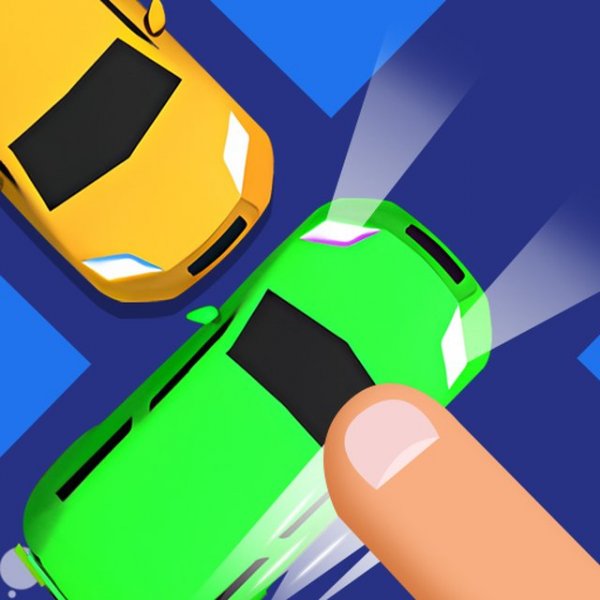
What You Actually Do
Each puzzle presents a grid of cars, and every car carries an arrow showing the only direction it can travel. Your job is to move each vehicle to its designated spot without letting one car block another. Because arrows restrict movement, you cannot simply shove cars around; you have to read the layout first and decide which car to shift, in what order, before making a move. The rules take seconds to understand, but later arrangements demand real sequential thinking.
Two Ways to Play
The game offers two distinct modes. In the first, each puzzle has a fixed number of moves, so every drag counts and wasted actions end the attempt. In the second, a timer replaces the move limit, and the challenge becomes finishing the arrangement before time runs out. The modes change how you approach a layout: the move-limited version rewards efficiency, while the timed version rewards steady, confident decisions under pressure.
Boosters and Difficulty
When a puzzle stalls, booster items can provide assistance. Using them strategically, rather than immediately, often makes the difference on harder boards. Difficulty grows gradually, so the early puzzles teach the arrow system before introducing tighter arrangements. The visual design is clean and family-appropriate, and the game runs in modern browsers on desktop, mobile, and tablet, with a full-screen option for larger layouts.





Comments
0 comments