
A One-Button Flight Loop
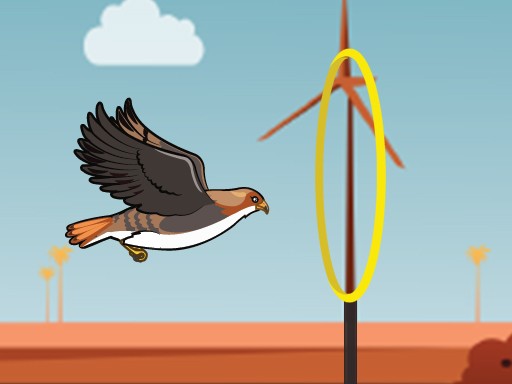
Flying Bird Arcade Challenge reduces its entire control scheme to a single input. Tapping the screen or pressing a key gives the bird a small upward boost; doing nothing lets it fall. That is the whole vocabulary of the game, and it is enough to create constant tension because every tap is a commitment. The bird never hovers, so players are always correcting its position rather than holding a steady line.
Reading the Pipe Gaps
Obstacles arrive as paired pipes extending from the top and bottom of the screen, leaving a gap the bird must pass through. Touching a pipe or the ground ends the run immediately. Because the bird's momentum carries between taps, the useful skill is not reacting to the gap but arriving at it already level. Players who tap rapidly tend to overshoot into the upper pipe; players who wait too long drop below the gap.
Endless Difficulty and Scoring
There are no fixed levels. The game continues until the bird collides with something, and the score climbs by one for each pipe pair cleared. Difficulty rises with the score, which means a strong early run directly produces a harder late run. This creates a natural risk curve: the longer a session lasts, the less forgiving the spacing becomes, so personal bests require both consistency and composure.
Two-Player Turn-Taking
The 2 Player tag points to a same-device format where players alternate attempts and compare scores rather than competing simultaneously. That structure suits the game's short runs, since a single mistake ends a turn and hands control to the other player. It also turns a solo reflex exercise into a low-pressure contest that works on a shared phone or desktop browser.



Comments
0 comments