
What Young Players Actually Do
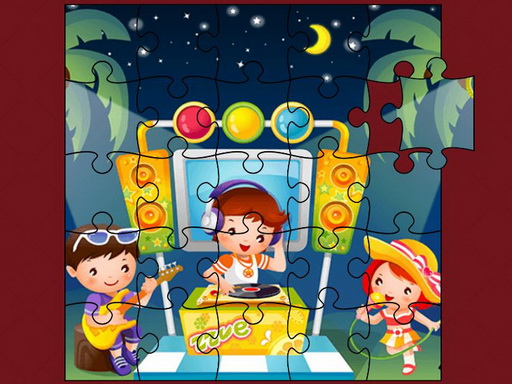
Children's Jigsaw Puzzle Game asks one simple thing of its players: move scattered pieces onto a board until the picture is complete. The screen shows a puzzle board and a set of loose pieces. A child clicks a piece, drags it toward the matching spot, and releases it. Visual cues indicate whether the piece belongs there, so the game responds clearly without requiring reading or instruction. The loop repeats until every piece is placed and the full image is revealed. That single mechanic is the whole game, which is appropriate for the toddler and preschool audience it targets.
Three Modes, One Growing Skill Set
Before starting a puzzle, children select from three difficulty modes. Each mode changes the number of pieces, so the same six images can be attempted at a simpler or more demanding level. This structure lets a child begin with fewer pieces, finish successfully, and then try the same picture with more pieces. Because the images stay constant across modes, the challenge comes from the piece count rather than unfamiliar artwork. That repetition supports shape recognition and patience without introducing new rules.
Image Selection and Visual Guidance
Six brightly colored images featuring friendly characters are available. A child picks one, and the pieces appear scattered on the screen. During play, visual cues help guide placement, which reduces frustration for children who cannot yet read or follow written directions. The art style is intentionally simple and appealing to young children, and the interface stays uncluttered so the puzzle itself remains the focus. No timers, scores, or penalties interrupt the experience.
Built for Small Hands and Short Attention Spans
The control scheme is drag-and-drop only, with no complex gestures or button combinations. The game runs without ads, creating a predictable environment where a child can work at their own pace. Parents looking for a low-pressure activity that occupies a preschooler for a few minutes will find the design matches that need. The skills exercised, hand-eye coordination, shape recognition, and concentration, are early developmental targets rather than competitive ones.



Comments
0 comments