
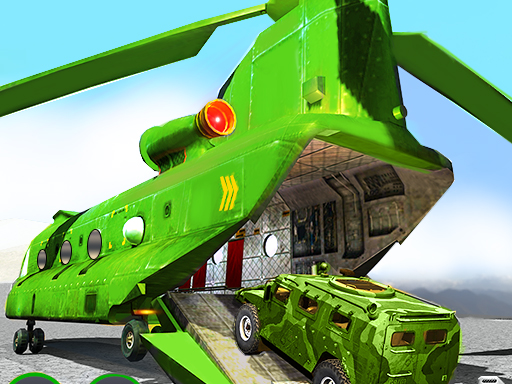
Mission Structure and Objectives
Every flight begins at a base. From there, mission markers on the map point to one of two task types: rescue operations, where you land near stranded soldiers and pick them up, or cargo runs, where you carry supplies to a designated drop zone. The map also helps you plan a route around trees, buildings, and mountain terrain. Completing either task type earns points, and consistent success can unlock additional levels.
Flight Controls and Handling
Steering uses on-screen buttons or a joystick, while a separate throttle adjusts altitude. That split between direction and lift is the core challenge: you can point the nose exactly where you want to go and still sink into a treeline if the throttle is too low. Landings demand the most precision, since rescue zones are often tighter than the open areas where you first practice. The arcade approach keeps inputs responsive rather than simulating every switch and gauge.
Terrain, Risk, and Route Planning
Mountains and forests are not just scenery. They force you to choose between a direct path and a safer, longer route, and they punish rushed descents. Buildings near outposts create similar pressure during cargo drops. Because the map shows mission markers but not every obstacle, reading the landscape as you fly matters as much as following the marker.
Progression and Skill Growth
Points come from completing missions, and careful flying tends to earn more than sloppy flying. That creates a loop where patience pays off: practice takeoffs and landings in open ground, then apply those habits to trickier rescue zones. Over time, coordination and quick decision-making improve naturally, which is the main progression the game offers.








Comments
0 comments